
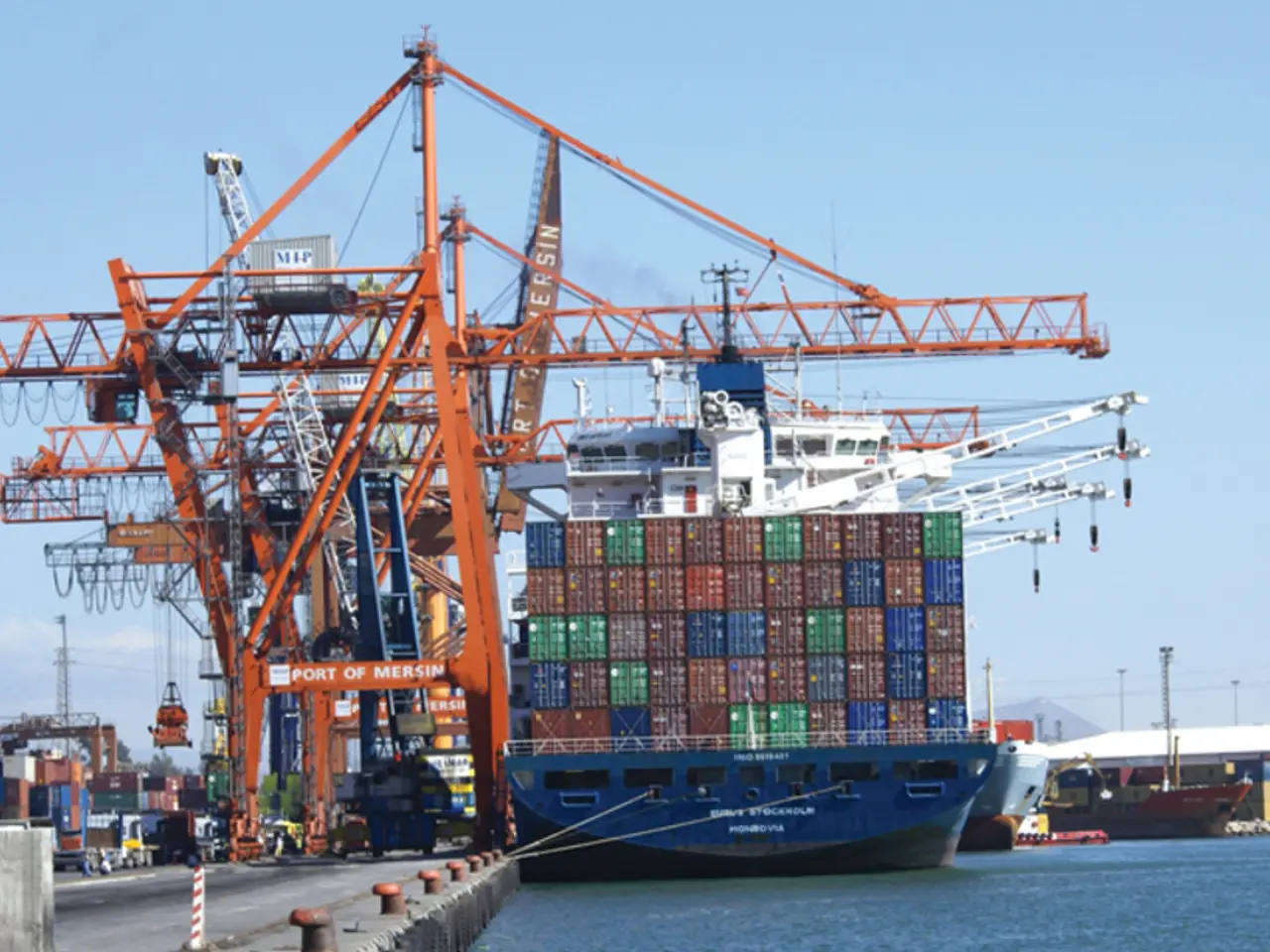
Support for Port Cranes Tax Credit Act by AAPA, viewed as a wiser option compared to tariffs
The Port Cranes Tax Credit Act of 2025, introduced by Representatives Mike Ezell (R-MS) and Nicole Malliotakis (R-NY), aims to reshore port crane manufacturing and reduce reliance on Chinese-built equipment. The bill has garnered support from the American Association of Port Authorities (AAPA) and port leaders across the country.
The Act addresses concerns about dependency on Chinese state-owned crane manufacturer Shanghai Zhenhua Heavy Industries (ZPMC), which currently dominates the port crane market in the U.S. Ports rely heavily on Chinese-made cranes, posing a national security risk as stated by lawmakers and port officials.
By incentivizing domestic production, the legislation seeks to revitalize American port crane manufacturing, create skilled jobs, especially in Gulf Coast states like Mississippi, and boost the competitiveness of U.S. ports globally.
The credit offers a production credit of 40%, rising to 60% if at least 90% of components are U.S.-made. Additionally, it provides a 25% investment tax credit for U.S. facilities that manufacture or repair ship-to-shore (STS) and mobile harbor cranes.
The AAPA supports the tax credit as a smarter, more effective alternative to steep tariffs on Chinese cranes. Ports such as Port Tampa Bay, which have relied on Chinese-made cranes to handle larger container ships, see the credit as a tool to maintain competitive capacity while addressing national security concerns.
The bill is crucial for strengthening supply chain resilience and is expected to generate over $813 million annually for New York State (Port of Albany). It is also important for closing infrastructure gaps and enabling ports to diversify and expand services (Pascagoula).
However, the bill is facing opposition due to concerns about potential tariffs on Chinese cranes. U.S. ports have expressed concerns that proposed tariffs on Chinese cranes could stall growth and cost billions of dollars. The U.S. ports' warnings about the tariffs on Chinese cranes underscore the importance of maintaining a strong and competitive port industry.
The concerns about tariffs on Chinese cranes have been raised in discussions related to trade and inflation. Global Logistics, 3pls, and other publications have reported on the concerns of U.S. ports regarding the proposed tariffs on Chinese cranes.
In conclusion, the Port Cranes Tax Credit Act of 2025 is designed to incentivize reshoring of port crane manufacturing, enhance U.S. national security and supply chain resilience, foster domestic job growth in manufacturing, and improve competitiveness of American ports without relying solely on punitive tariffs on foreign cranes.
- Global trade and business are impacted by the Port Cranes Tax Credit Act of 2025, as it aims to reshore port crane manufacturing in the U.S., reducing dependence on Chinese-built equipment.
- The legislation's provision of tax credits for domestically manufactured cranes could significantly influence finance, as it is expected to generate over $813 million annually for New York State and close infrastructure gaps for ports like Pascagoula.
- Politics and general news are centered on discussions surrounding the Port Cranes Tax Credit Act of 2025, with concerns about tariffs on Chinese cranes raised in talks related to trade, inflation, and port industry competitiveness.




