
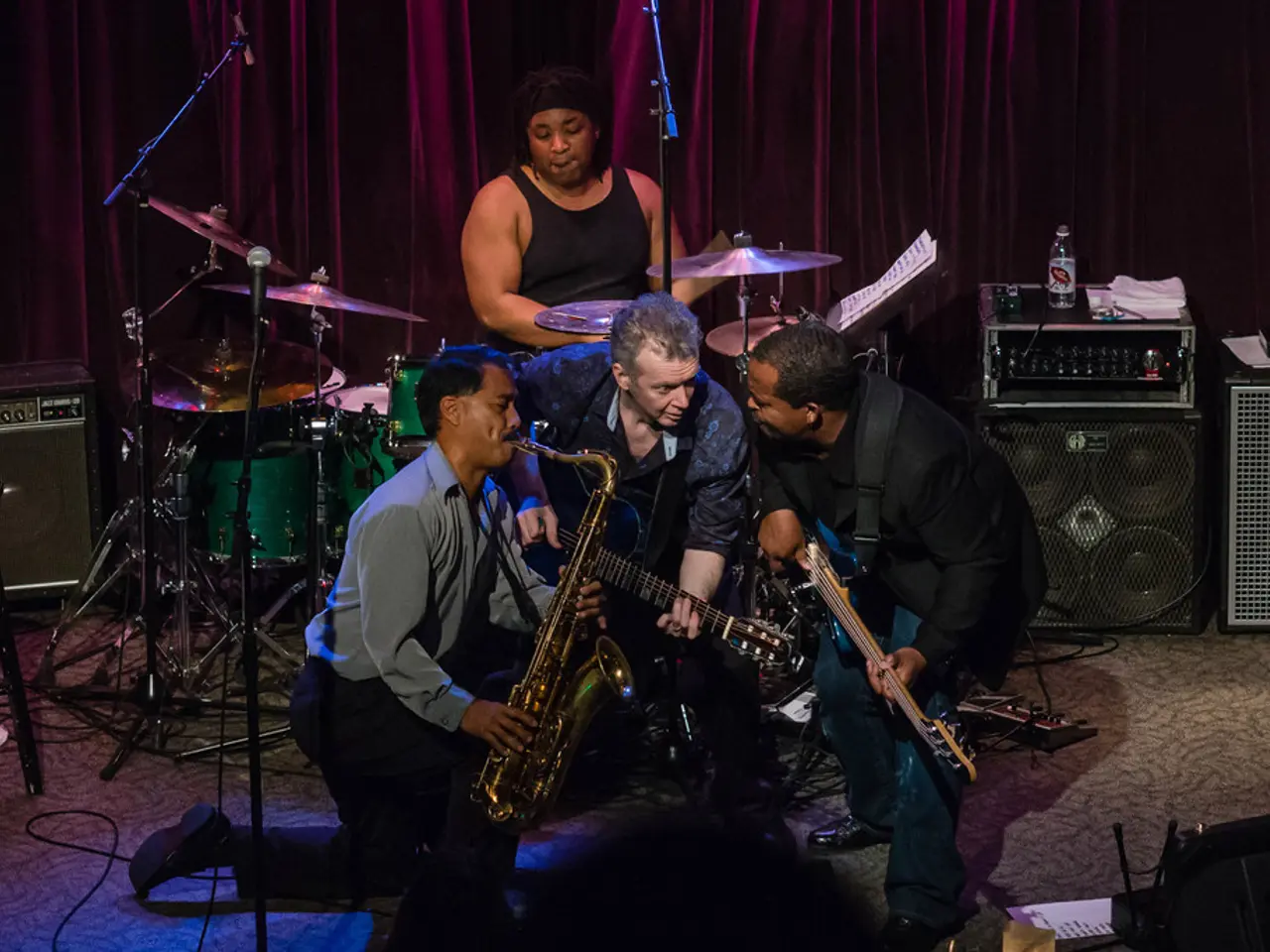
Struggling Irish musicians call for increased government backing in the streaming era, according to Imro.
The Irish Music Rights Organisation (IMRO) has put forth a series of recommendations to the Government, aiming to bolster the Irish music industry and address the financial challenges faced by many musicians. The sector contributes an impressive €1 billion annually to the Republic's economy, yet a significant number of musicians rely on employment in other sectors to sustain their careers.
IMRO's proposals encompass several key areas, including advocating for fair Artificial Intelligence (AI) legislation, implementing tax incentives inspired by the film industry, supporting grassroots music venues, making the Basic Income for the Arts scheme permanent, and increasing access to project and tour funding.
**Fair AI Legislation and Regulations**
IMRO advocates for robust AI legislation and regulations to protect musicians from emerging risks associated with unregulated AI. The organisation calls for the full implementation of the EU AI Act to ensure streaming platforms adhere to transparency and copyright licensing obligations.
**Financial Strategies from the Film Industry**
IMRO proposes applying financial strategies from the film industry to the music sector, such as introducing tax incentives for using Irish music in projects. This strategy aims to stimulate economic growth and ensure fair compensation for musicians.
**Supporting Grassroots Music Venues**
IMRO suggests government backing for grassroots music venues (GMVs) through tax incentives and reducing VAT on tickets to the European average. Additionally, IMRO proposes an industry-led voluntary levy—for example, a £1 levy on every ticket sold at large venues—to fund GMVs, which are essential incubators for new talent.
**Making the Basic Income for the Arts Permanent**
IMRO wants the Basic Income for the Arts, currently in a pilot phase, to be put on a permanent footing by the Government. This scheme provides financial stability to artists and has been shown to positively impact their mental health and creative output.
**Increasing Access to Funding and Professional Development**
IMRO calls for increased access to project and tour funding and professional development initiatives to better support musicians’ careers and sustainability.
Eleanor McEvoy, chairwoman of IMRO, emphasised the importance of these steps for a sustainable and equitable future for Irish music. She stated, "Irish people don't just enjoy music, they live it."
According to the research, more than 13,400 people are employed in the music industry, yet just 43% of IMRO members surveyed said they had full-time jobs in the sector. The uneven distribution of streaming income means musicians in Ireland receive a disproportionately lower share of the revenue relative to streaming platforms.
Two-thirds of survey respondents said the high and growing price of concert tickets is a barrier to gig-going, while almost half cited accommodation costs as an issue for attending music events. Irish adults spent an average of €757 on music events last year, including festivals and individual concerts.
IMRO looks forward to working closely with the Government and Oireachtas committees to further these recommendations. The organisation also encourages the Government to apply financial strategies similar to the Irish film industry's Section 481 tax credit to alleviate the financial burden on musicians. Additionally, IMRO suggests the Republic's music industry could benefit from State intervention in marketing, as demonstrated by the success of K-pop and South Korea's efforts to export it to a global audience.
In the light of IMRO's recommendations, it would be advantageous to explore the implementation of tax incentives for music usage, like those in the film industry, to stimulate economic growth and ensure equitable compensation for musicians in the business sector. Additionally, the entertainment industry, including music, could earn significant profits by applying State intervention in marketing, as exemplified by the successful global promotion of K-pop by South Korea.




