
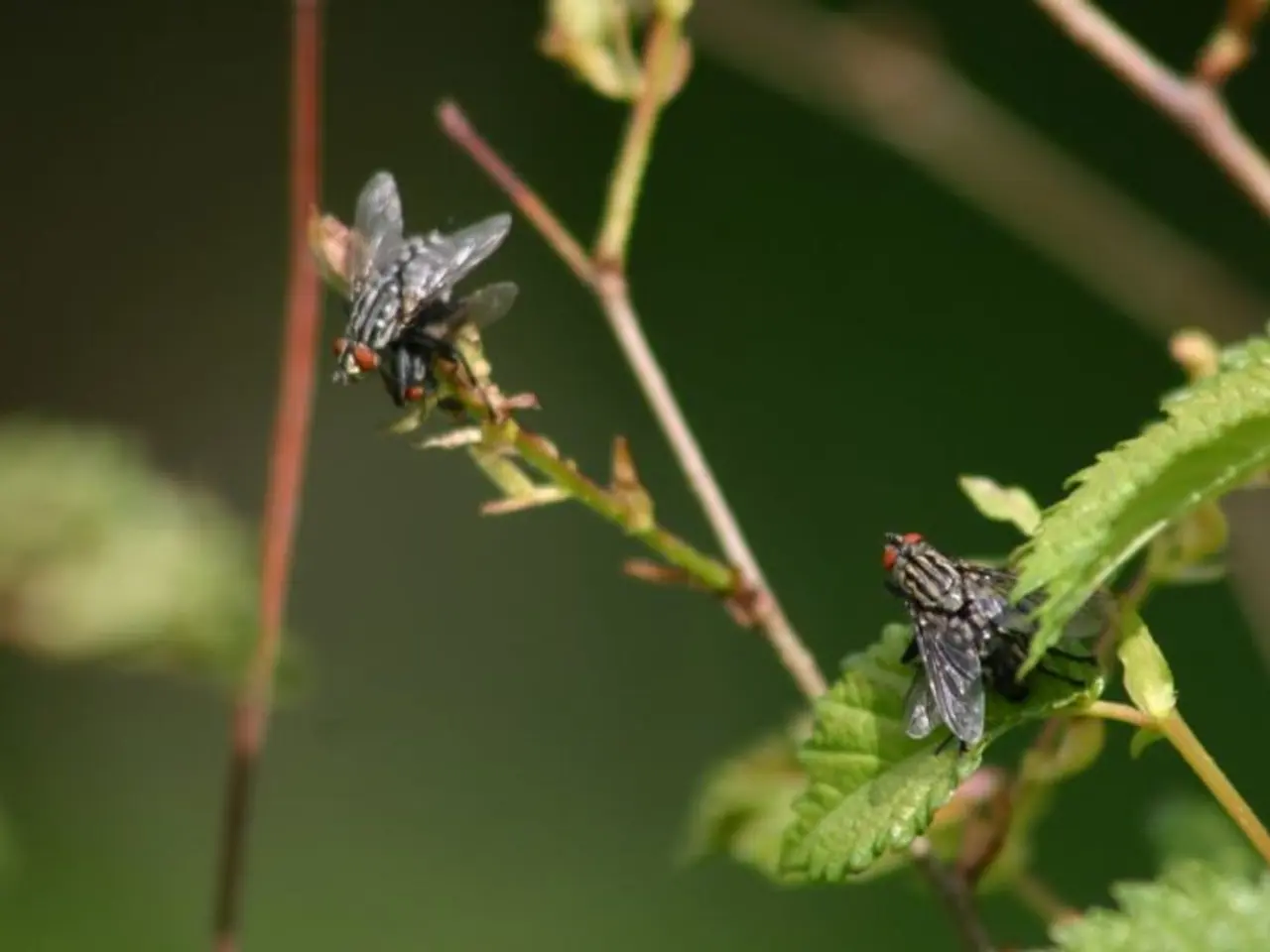
Sterilized fly facility set for launch in Mexico by 2026, aimed at combating screwworm infestation
The United States and Mexico have joined forces in a significant endeavour to combat the New World screwworm (NWS), a parasitic pest that poses a serious threat to livestock health. The project, which employs the sterile insect technique (SIT), aims to eradicate the screwworm by releasing sterile male flies into the wild, thereby preventing reproduction and reducing the pest population.
The U.S. Department of Agriculture (USDA) is constructing a $750 million sterile fly production facility at Moore Air Force Base near the Texas-Mexico border. This state-of-the-art facility, set to produce up to 300 million sterile male screwworm flies per week, will work in harmony with existing facilities in Panama and Mexico to contain and push the screwworm southward.
The screwworm, infamous for carrying maggots that burrow into the skin of living animals, can cause devastating damage and is often fatal for the affected animals. By employing the sterile insect technique, the project seeks to protect livestock health, secure the U.S. food supply, and safeguard the cattle and livestock industry, valued at over $100 billion.
In addition to the sterile fly production, complementary efforts include deploying fly traps and lures, training tick riders on horseback and dogs to detect the parasite, and restricting cattle imports from Mexico until the screwworm threat is reduced.
Mexico's government has also taken action, investing $51 million in building a facility to combat the screwworm. Meanwhile, the U.S. has contributed $21 million towards the cost, with Mexico spending $30 million.
The gradual reopening of imports of cattle, bison, and horses from Mexico has begun, with ports starting to reopen in phases from July 7. It's important to note that this reopening is contingent upon the reduction of the screwworm threat.
The infestation of screwworm can impact both livestock and wildlife, underscoring the importance of this joint project in protecting the ecosystem as a whole. As the project progresses, the hope is that the combined efforts of the U.S. and Mexico will lead to the eradication of the New World screwworm, ensuring a healthier future for livestock and the environment.
References: 1. USDA News Release 2. Mexico's Secretary of Agriculture and Rural Development Press Release 3. USDA Fact Sheet on New World Screwworm 4. World Health Organization Fact Sheet on New World Screwworm 5. Centers for Disease Control and Prevention Fact Sheet on New World Screwworm
The U.S. Department of Agriculture's investment in a $750 million facility for sterile fly production aligns with the government's commitment to finance the project. The facility's capacity for producing up to 300 million sterile male screwworm flies per week supports the goals of the project in the realm of industry and science.
As part of the project, the joint endeavour between the U.S. and Mexico includes efforts to contain the screwworm, which could potentially have implications for both domestic and international exports, given its impact on livestock health and the country's food supply.
The joint project's focus on eradicating the New World screwworm extends beyond livestock health, as it aims to protect and preserve the environment, furthering the field of environmental-science.




