
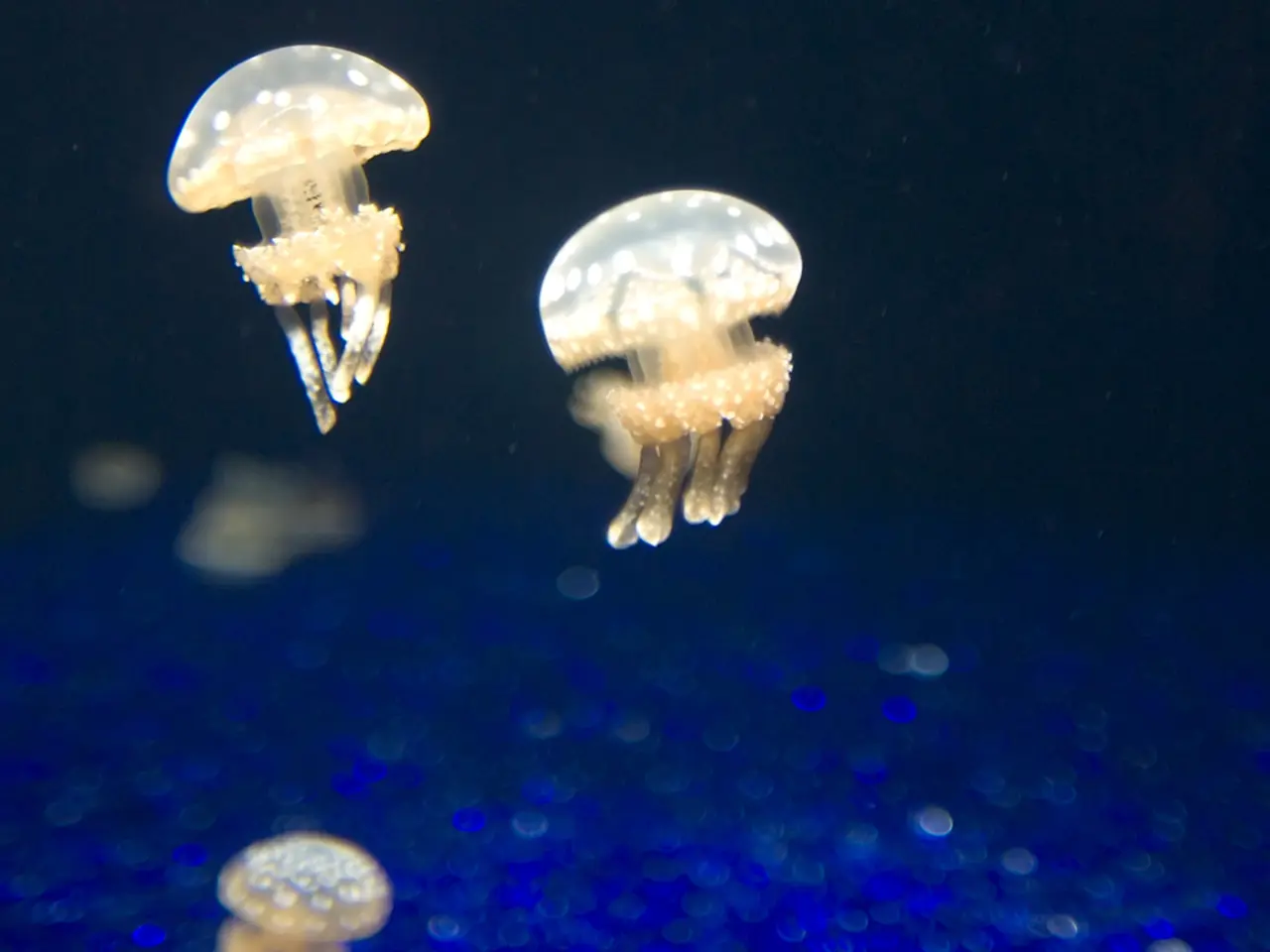
Nuclear power plant in France halts operations because of a swarm of jellyfish clogging cooling systems.
In August 2025, a massive and unpredictable jellyfish swarm caused a temporary shutdown of four out of six reactors at the Gravelines nuclear power plant in France, one of Western Europe's largest nuclear plants [1][2][3]. The incident highlighted the emerging environmental threats posed by rising sea temperatures and invasive jellyfish species to the reliability and operation of nuclear power plants with coastal cooling systems.
Rising water temperatures in the North Sea and English Channel, partly due to global warming, have created favorable conditions for jellyfish blooms by extending their reproductive window and increasing plankton, their food source [2][3][4]. The Asian Moon jellyfish, an invasive species first spotted in the region in 2020, is particularly known for clogging cooling systems of nuclear plants in multiple countries. While EDF did not confirm this species was responsible for the Gravelines event, it is a prime suspect given its characteristics and spread [2][4].
The Gravelines plant uses seawater drawn through pumping stations for reactor cooling. Jellyfish entered filter drums at these stations, obstructing flow and forcing the reactors to shut down to avoid damage. The shutdowns posed no safety risk to personnel or the environment, and the plant resumed operations after cleaning the filters [1][2][3].
Derek Wright, a marine biology consultant at the National Oceanic and Atmospheric Administration Fisheries, commented on the situation, stating that everyone should consider the unintended consequences of heat pollution in relation to nuclear power [5]. He explained that jellyfish breed faster in warmer water, and areas like the North Sea are becoming warmer. The plant is cooled from a canal connected to the North Sea.
The increase in jellyfish around Gravelines, between Dunkirk and Calais, is due to warming waters and the introduction of invasive species. The Asian Moon jellyfish species has caused similar problems at ports and nuclear plants in China, Japan, and India [6]. Fortunately, the species found in the North Sea does not have a poisonous sting.
This incident reflects a broader challenge as climate change increases marine heatwaves and invasive jellyfish incursions, creating operational risks for coastal power plants relying on seawater cooling. Solutions require addressing carbon emissions and agricultural runoff, which exacerbate warming and low-oxygen waters that favor jellyfish proliferation. Some experimental approaches include using jellyfish as food or bio-resource, but systemic climate and pollution controls are key [3].
The Gravelines nuclear plant is located near beaches that have become hotspots for migrants attempting to cross into Britain [7]. EDF did not immediately respond to a request for comment.
References:
- Gravelines nuclear plant shut down due to jellyfish invasion
- Jellyfish swarm shuts down French nuclear plant
- Climate change and jellyfish: A growing threat to nuclear power
- Asian Moon Jellyfish: A New Invasive Species in European Waters
- Marine biologist warns of heat pollution and jellyfish at Gravelines
- Asian Moon Jellyfish: A Global Problem
- Gravelines nuclear plant and migrant crisis
- The unpredictable actions of jellyfish, such as the Asian Moon jellyfish, pose operational risks to the nuclear power industry, particularly for plants with coastal cooling systems like the Gravelines plant in France.
- As global warming continues to raise water temperatures in the North Sea and English Channel, environmental science predicts an increase in jellyfish populations, which could impact various industries, including energy production and finance due to potential shutdowns.
- To mitigate the operational risks posed by jellyfish blooms, it's crucial for the industry, governments, and environmental-science experts to collaborate on addressing carbon emissions and agricultural runoff, which contribute to warming and low-oxygen waters that favor jellyfish proliferation.