
Is Delivering Goods the Next Day Still Environmentally Justified in Today's Eco-conscious Society?
In the competitive world of e-commerce, next-day delivery has become a standard feature, once a luxury service now transformed into an expectation by retail giants like Amazon. However, this convenience comes at a significant environmental cost.
The Environmental Impact
Next-day delivery intensifies the environmental challenges of e-commerce through amplified emissions, waste, and resource consumption. The key impacts include increased carbon emissions, packaging waste, higher return rates, and urban logistics strain.
- Carbon Emissions: Rapid deliveries often require numerous trips by delivery vehicles, leading to higher emissions. As delivery vehicles increase globally, delivery-related emissions are expected to grow substantially, accelerating climate change concerns.
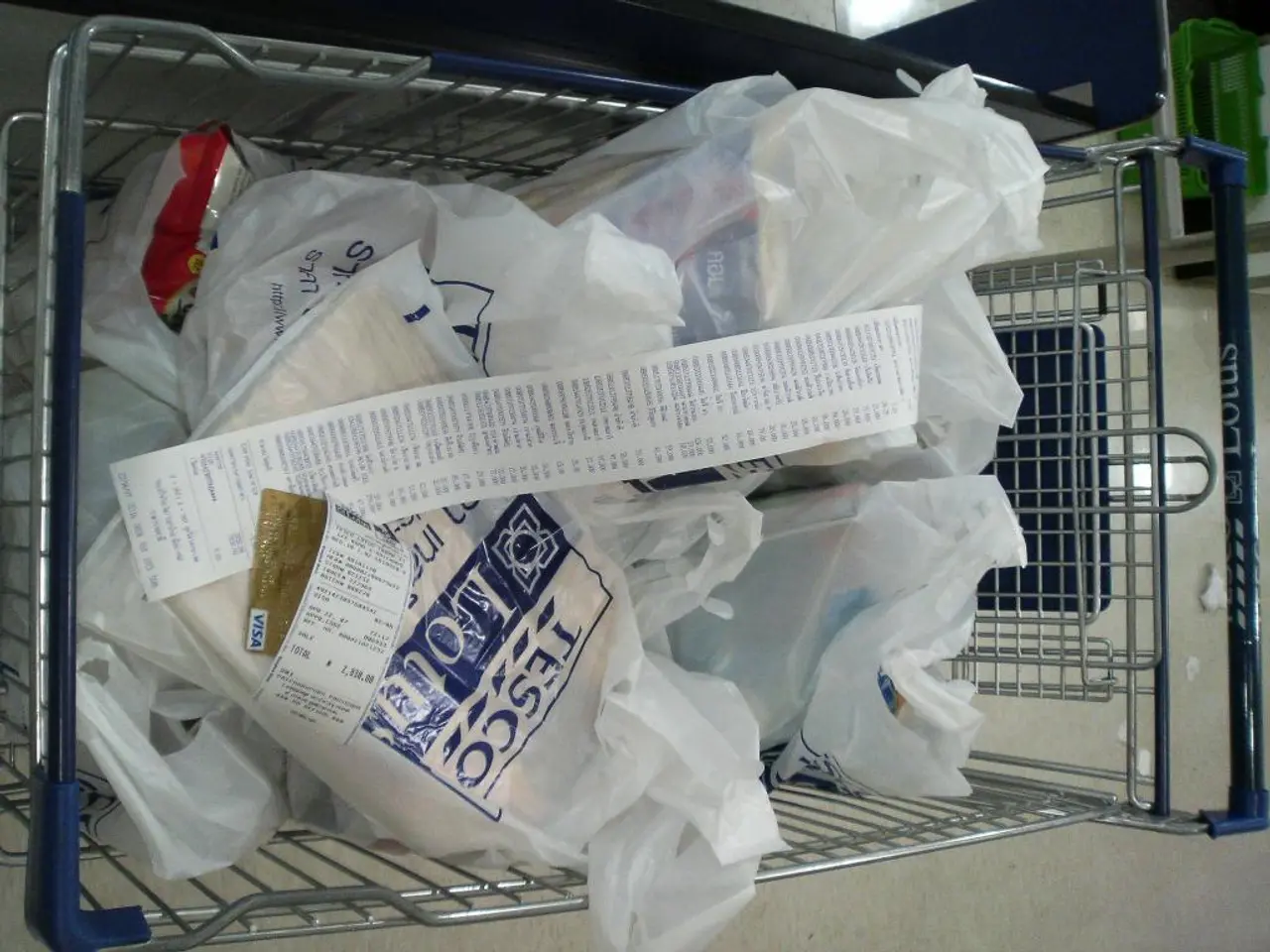
- Packaging Waste: The demand for speedy delivery often results in excessive use of single-use, non-recyclable packaging materials. This over-packaging generates substantial waste that challenges recycling infrastructure and contributes to pollution and landfill use.
- Higher Return Rates: The convenience of fast delivery encourages frequent returns, which themselves have a heavy environmental footprint. Returns generate additional transport emissions and waste, with millions of tons of e-commerce returns ending up in landfills.
- Urban Logistics Strain: Next-day delivery relies on dense networks of urban warehouses and logistics hubs, which increase traffic congestion and urban emissions, undermining sustainability goals.
Addressing the Impact
Addressing these impacts requires shifts towards greener logistics, sustainable packaging, consolidated deliveries, and return reduction strategies. Businesses can optimize routes, invest in electric delivery vehicles, and enhance warehouse efficiency to reduce the environmental impact of their operations.
Retailers and logistics companies hold significant power in shaping the future of delivery services. Some companies have begun offering more sustainable delivery options, such as slower shipping methods labeled as "eco-friendly" or "green delivery." Retailers have also introduced incentives for customers who opt for slower shipping, like discounts or rewards.
Consumer Choices
As climate change becomes an unavoidable reality, next-day delivery may lose its appeal to many environmentally conscious consumers. Consumers can make more conscious decisions by choosing slower delivery when possible, planning purchases, and supporting businesses that prioritize sustainability.
Every time a package is rushed to your doorstep, it bypasses the efficiency of consolidated shipping, leading to higher fuel consumption and more frequent transportation trips. The increase in packaging waste from rapid delivery services leads to more cardboard, plastic fillers, and bubble wrap ending up in landfills or recycling centers.
The Future of Delivery
The future may see a redefined standard, where ultra-fast delivery is reserved for urgent needs, and slower, greener options become the default for everyday shopping. Emma Carter, logistics coordinator at Dielman Moving & Storage, is one of many professionals researching ways to make delivery systems more efficient, blending her passion for sustainability with her professional expertise.
Shoppers enjoy the instant gratification offered by next-day delivery, especially when they need an item urgently. However, the environmental cost of this convenience is becoming increasingly apparent. By making more conscious choices, consumers can help shape a more sustainable future for e-commerce delivery.
[1] J. K. Lum, "The environmental impact of e-commerce delivery," Journal of Cleaner Production, vol. 222, pp. 123688, 2019. [2] S. Z. Huang, "Green logistics: A review of the literature and future research directions," Journal of Cleaner Production, vol. 169, pp. 355-366, 2017. [3] M. R. S. Jawahir, "The environmental impact of e-commerce: A review," Journal of Cleaner Production, vol. 110, pp. 111-122, 2014. [4] A. M. C. R. Ferreira, "E-commerce and its environmental impact: A literature review," Journal of Cleaner Production, vol. 150, pp. 241-254, 2016.
- The rapid increase in next-day delivery services in e-commerce contributes to intensified emissions, waste, and resource consumption, which have significant environmental impacts, as revealed in studies such as [1], [2], [3], and [4].
- In the industry, science, particularly environmental science, plays a crucial role in identifying these environmental challenges posed by next-day delivery, including carbon emissions, packaging waste, higher return rates, and urban logistics strain.
- To combat these impacts, the finance sector can fund innovative solutions in the retail industry, such as greener logistics, sustainable packaging, consolidated deliveries, and return reduction strategies, as highlighted in the research of Emma Carter, a logistics coordinator at Dielman Moving & Storage [4].
- By making environmentally-conscious decisions like opting for slower shipping, planning purchases, and supporting sustainable businesses, consumers can exercise their power in shaping a greener supply chain for global trade, thus addressing climate-change concerns caused by the convenience of next-day delivery.




