
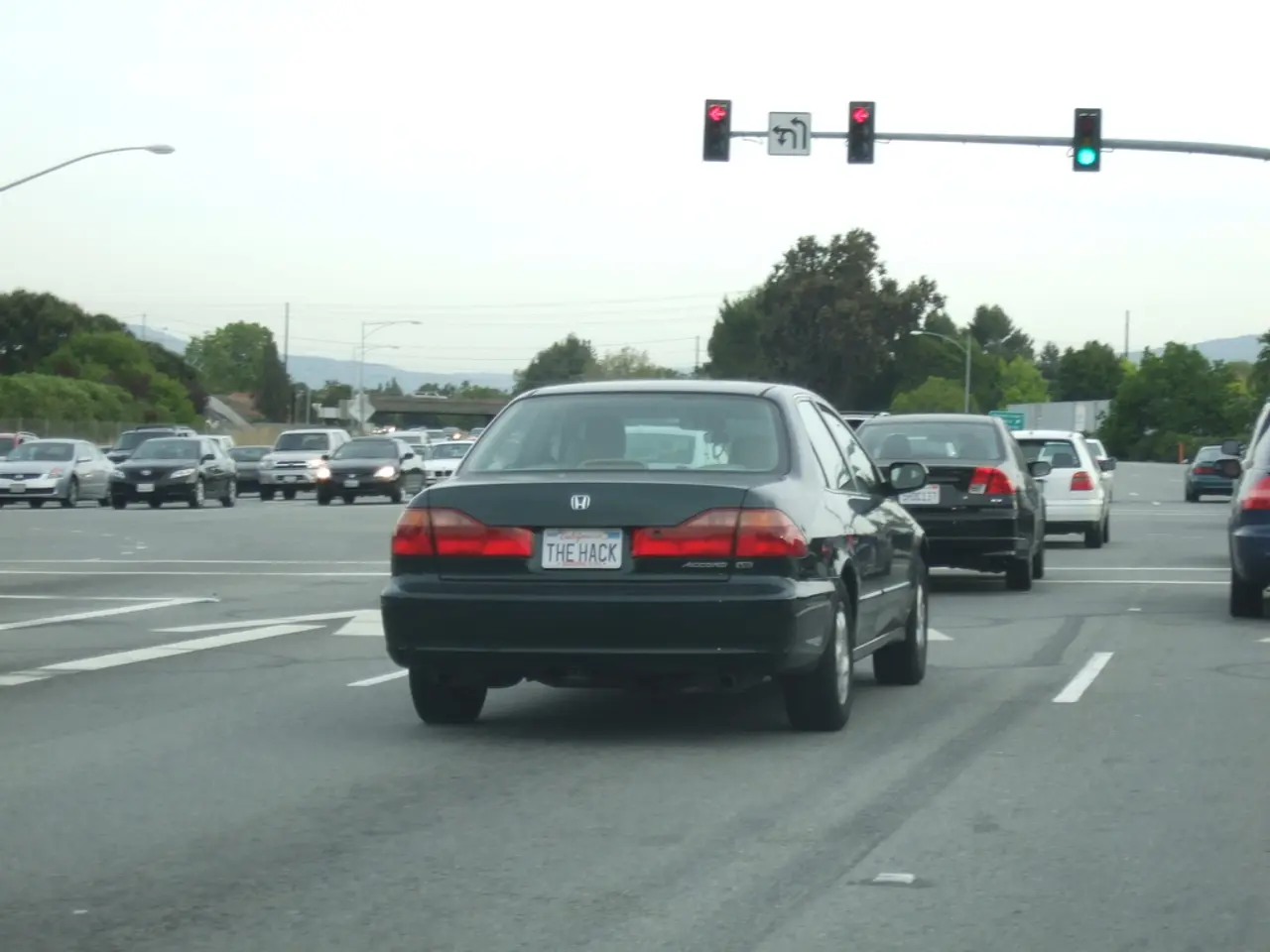
Holidaymakers in the Allgäu region face restrictions or penalties due to regional action
The picturesque mountain villages of Allgäu, Germany, are grappling with a familiar problem during peak tourist seasons - traffic congestion. While the neighbouring Tyrol region in Austria has implemented a well-documented traffic management model, Allgäu's approach remains less defined.
The Tyrolean state government has imposed weekend closures on certain roads, with police controlling routes, turning back traffic escapees, and imposing fines. However, this approach has raised concerns from the ADAC and the Bavarian state government, who suspect potential discrimination against German drivers.
In Tyrol, transit travelers are not allowed to leave the highway during summer and winter vacation seasons to avoid traffic jams, particularly affecting the Innsbruck metropolitan area and the Brenner route towards Italy. The Tyroleans have also expressed a desire for better coordination in border traffic, specifically discussing the networking of dosimeter ramps on the Fernpass route with those at the Füssen border tunnel.
Allgäu, too, is experiencing similar issues, with traffic jams inevitable at the Inntaldreieck in Rosenheim due to the convergence of routes from Innsbruck, Salzburg, and Munich. Signs with the inscription "Stay on the highway" and digital displays are planned for this junction.
To address the issue, potential solutions for Allgáu inspired by the Tyrol model may involve implementing a reservation or booking system for vehicles accessing popular routes during high seasons to control inflow, enhancing real-time traffic monitoring and traveler information systems, strengthening and incentivizing public transit and shuttle services for tourists, and considering seasonal traffic restrictions or tolls aimed at discouraging unnecessary vehicle trips at peak times.
CSU federal MP Stephan Stracke, whose constituency is in the affected region, has lobbied the Federal Ministry of Transport, with Berlin reportedly open to closures and driving bans. A petition has been initiated to the Bavarian Landtag to address the traffic congestion issues in Allgäu.
A round table discussion is scheduled at the end of September, moderated by the Swabian government president Barbara Schretter, involving all affected parties including the affected places, district offices, representatives of the State Building Authority, police, and representatives from Tyrol. The hope is that this discussion will provide new options for addressing traffic congestion issues in Allgäu.
The Federal Ministry of Transport is open to action against traffic escapees at other locations, such as the Upper Bavarian highways A8 and A93 at Rosenheim. However, it's important to note that the Federal Motorway Company, a federal-owned corporation, is interposed between the Federal Ministry of Transport and the management of roads, with state building authorities, district administrations, or municipalities themselves responsible.
As Allgäu continues to attract tourists, implementing comprehensive congestion control strategies could mitigate seasonal congestion, much like Tyrol's approach. Further integration with broader EU transport initiatives may also benefit regional congestion management efforts.
References:
[1] Article on Tyrol's traffic management measures
[2] Article on Allgäu's traffic congestion issues
[3] Article on potential solutions for Allgäu inspired by Tyrol's model
[4] Article on EU transport initiatives
[5] Search results for congestion management measures in Allgäu
- To combat the seasonal traffic congestion in Allgäu, it is suggested that they adopt a reservation system for vehicles accessing popular routes, similar to the one implemented in Tyrol, Austria.
- The German Federal Ministry of Transport shows support for action against traffic escapees, like on the Upper Bavarian highways A8 and A93 at Rosenheim, reminiscent of the control strategies used in the Tyrolean industry.
- In the realm of policy-and-legislation, there have been appeals to implement driving bans and closures on selected roads, mirroring Tyrol's tactics in finance and politics, as well as discussions for seasonal traffic restrictions or tolls aimed at mitigating unnecessary vehicle trips during peak tourist seasons.




