
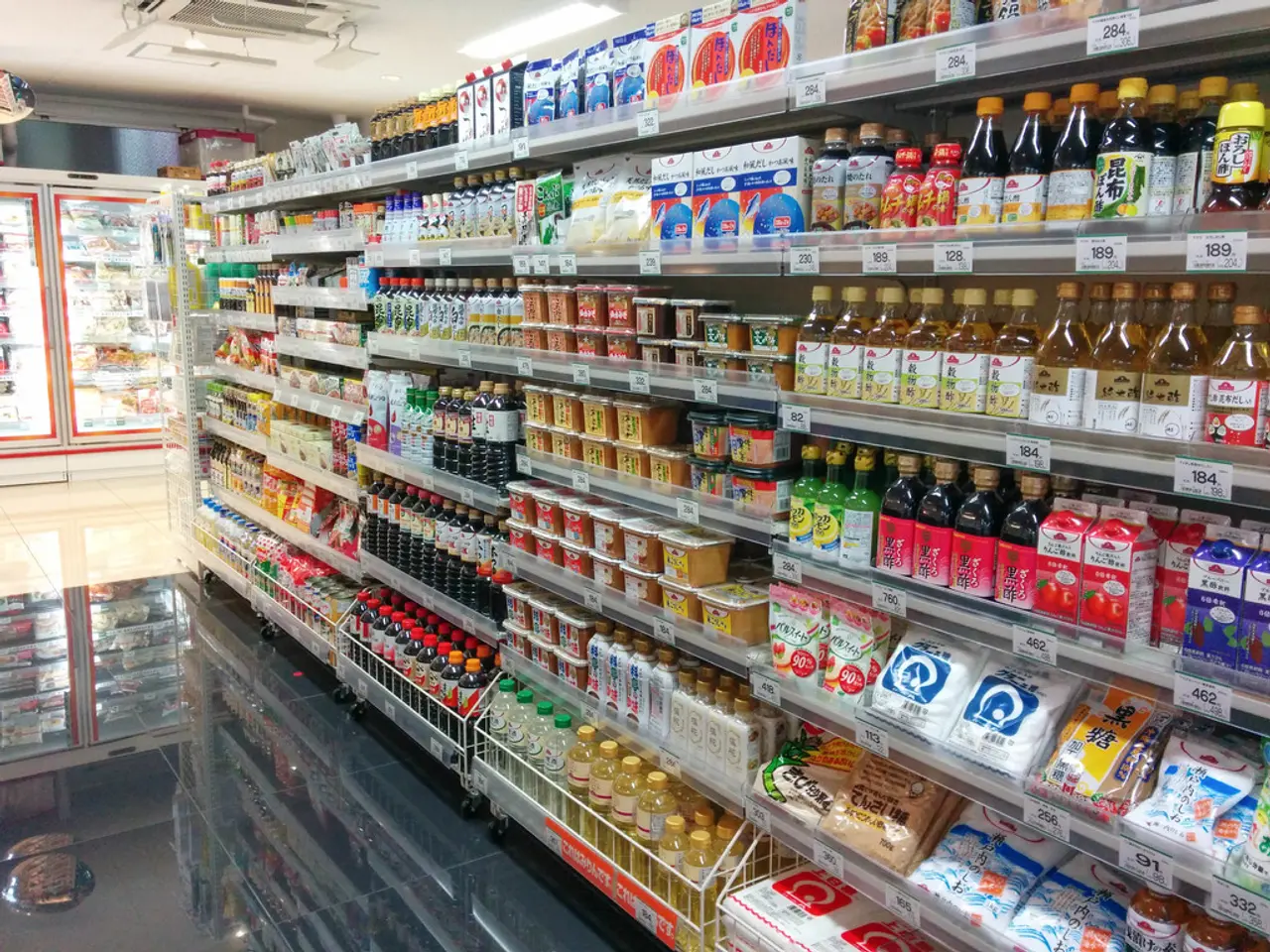
German consumers encounter hefty price hikes
In a concerning turn of events, experts predict that Germany could slip into a recession in the second half of 2022 due to a combination of factors. The slowdown in private consumption and lack of significant impulses from business investment activity or foreign trade have contributed to this potential economic downturn.
The economist barometer value for the current economic situation in Germany remains relatively stable at 38.0 points in August, nearly the same as the previous month. However, this stability does little to alleviate concerns about the future. Jörg Krämer, the Commerzbank chief economist, has warned of a "massive cost surge" that could further exacerbate the economic situation.
One of the primary reasons for the potential recession is the high energy costs. The expiration of the nine-euro ticket and fuel rebate, coupled with the introduction of a gas surcharge, has led to a potential price increase for an average household of 300 to 1000 euros per year. This financial strain on consumers is expected to lead to decreased spending, resulting in a decline in retail sales.
Geopolitical tensions and trade uncertainties have also played a significant role in the economic slowdown. The closure of Russian natural gas supplies due to international sanctions has led to an energy crisis that has hit energy-intensive German industries hard. Furthermore, concerns about U.S. tariffs on EU goods, autos, steel, and aluminum have created export demand disruptions.
Structural challenges like bureaucratic burdens and an aging population have further weighed on economic growth. Reduced investments in equipment and construction have also contributed to stagnation risks.
The US, on the other hand, has seen a slowdown in inflation. The inflation rate in the US has slowed to 8.5 percent in August, down from 9.1 percent in the previous month. This moderation in US inflation has boosted stock prices on Wall Street. However, US central banker Mary Daly has warned against declaring victory over inflation too early, stating that it remains much too high and not near the price stability target. As a result, experts now expect a somewhat slower pace of interest rate hikes by the US Federal Reserve.
The possibility of a recession in Germany in the second half of 2022 was further influenced by Germany's heavy reliance on exports to the US, its largest trading partner. The imposition of tariffs risks significant drops in exports and industrial production. The 2022 energy crisis has increased production costs, and Germany’s transition away from Russian energy sources has raised permanent energy price levels, reducing industrial competitiveness. While fiscal stimulus and easing monetary policy were introduced later to counter these effects, the overall economic outlook in mid-2022 remains subdued with the real possibility of GDP contraction in the second half of the year.
The Institute for Macroeconomics and Business Cycle Research (IMK) finds that the risk of recession in Germany remains high due to these factors. The Kremlin's potential gas supply stop could further exacerbate the economic situation. Manfred Schweren of asset manager Privalor analyzes that prices are slowly seeping through to consumers in Germany. A large majority of participants in the August survey consider a recession scenario "likely" or "very likely." Private consumption, which supported economic development in the first half of the year, is likely to fall short as a growth driver in the second half.
[1] Institute for Macroeconomics and Business Cycle Research (IMK) [2] Euro am Sonntag economist barometer [3] Privalor asset manager analysis
- Concerns about the future economic outlook in Germany, as depicted by the Institute for Macroeconomics and Business Cycle Research (IMK), are heightened due to the potential gas supply stop from the Kremlin and the financial strain on consumers resulting from increased energy costs.
- The slowdown in private consumption, predicted to falter as a growth driver in the second half of the year, is indicative of the impact business activities in Germany may have on the overall economy, highlighting the importance of significant impulses from business investment and foreign trade.




