
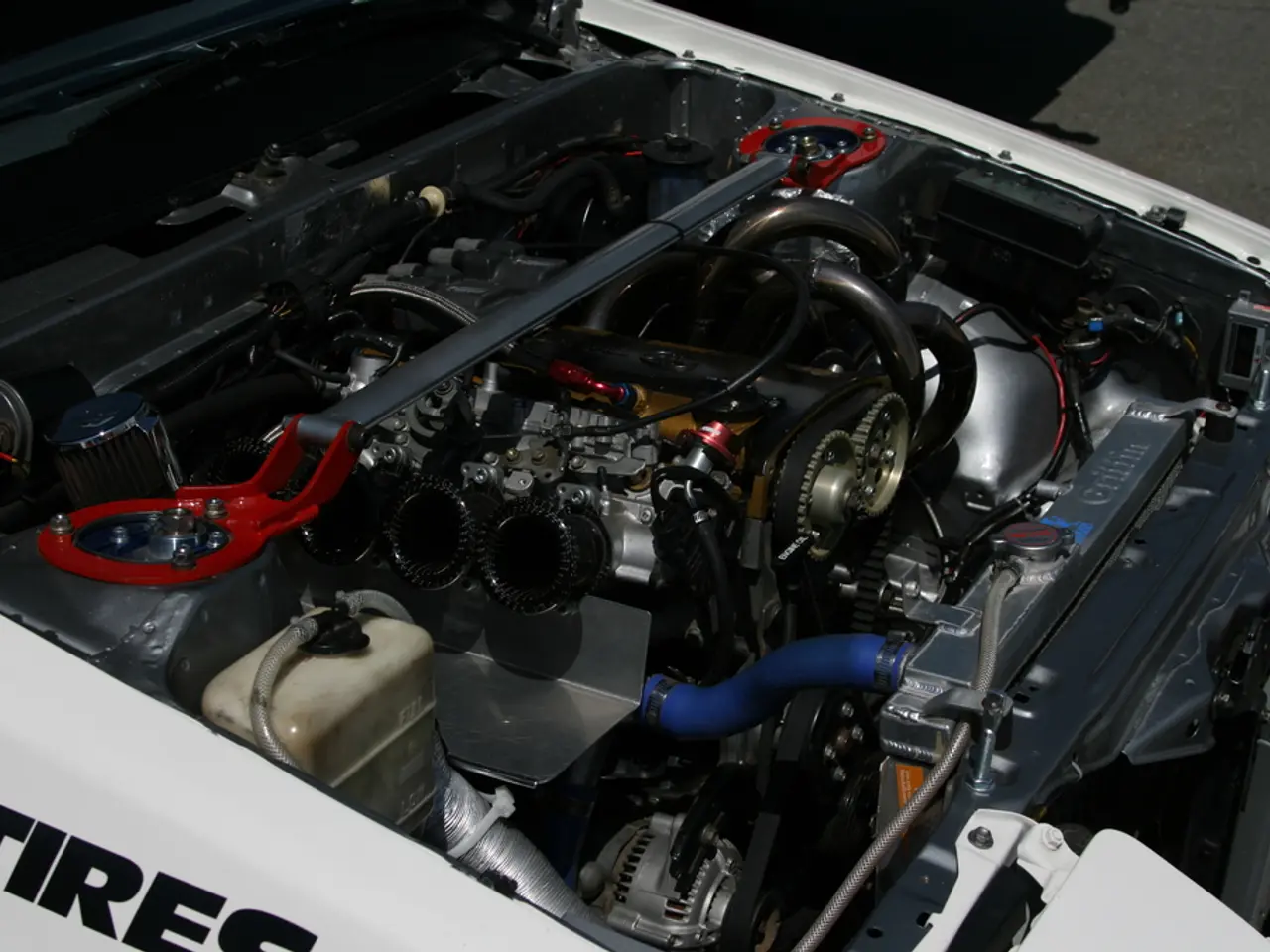
Car with traditional fuel engine - the repercussions are evident
The Volkswagen Group reported a slight increase in car sales in the second quarter, with a 1.2 percent year-on-year rise to 2.27 million vehicles, according to the company's latest financial report. However, the results in China were mixed as the company grapples with the transition from internal combustion engines (ICE) to electric vehicles (EV).
In Europe, the VW group saw a significant boost in BEV sales, with nearly three-quarters more battery electric vehicles sold across all brands. The core VW car brand also saw a total increase of 4 percent in the second quarter. Audi, on the other hand, recorded a decrease of 8.2 percent, while Porsche struggled with a drop of 4.3 percent in the same period.
In contrast, the VW group opted for ICE production instead of focusing on electric vehicles in China. This decision was driven by production constraints and short-term profitability considerations amid structural market changes. Parts of the production network, especially plants like the Nanjing facility, were not suitable for easy conversion to EV production due to their urban location and infrastructure limitations.
Despite this, the decision to focus on ICE in China paid off initially, with rising sales in June 2025. However, the company faced a capacity utilization crisis due to declining demand for ICE cars, with plants operating far below profitability thresholds. This led to closures like the Nanjing plant, which stopped production entirely in 2025.
The slowing ICE market and rising dominance of local EV competitors like BYD pressured Volkswagen to accelerate its transformation toward electric, intelligent, connected vehicles. Many Volkswagen joint venture plants in China have been or are being retooled for EV production.
Despite an overall decline in vehicle deliveries in China (2.3 percent drop in H1 2025), Volkswagen reported smaller declines than before and some positive sales momentum in June 2025 from its ICE vehicles. The company is now engaged in a large-scale strategic pivot, reducing legacy ICE assets to prioritize EV opportunities in China, which is critical for its long-term survival and competitiveness in the world’s largest automotive market.
In summary, Volkswagen's focus on ICE in China was a necessary short-term measure amid structural market changes. The result was a painful but necessary transition involving plant closures and ramped-up efforts to adopt EV manufacturing, reflecting the broader shift in China's auto industry. Volkswagen is now in positive territory after six months, as announced on July 9.
The Volkswagen Group, despite focusing on ICE production in China due to production constraints and profitability considerations, faced a capacity utilization crisis as demand for ICE cars declined. However, the group's divergent strategy in Europe saw a significant boost in battery electric vehicle sales.




